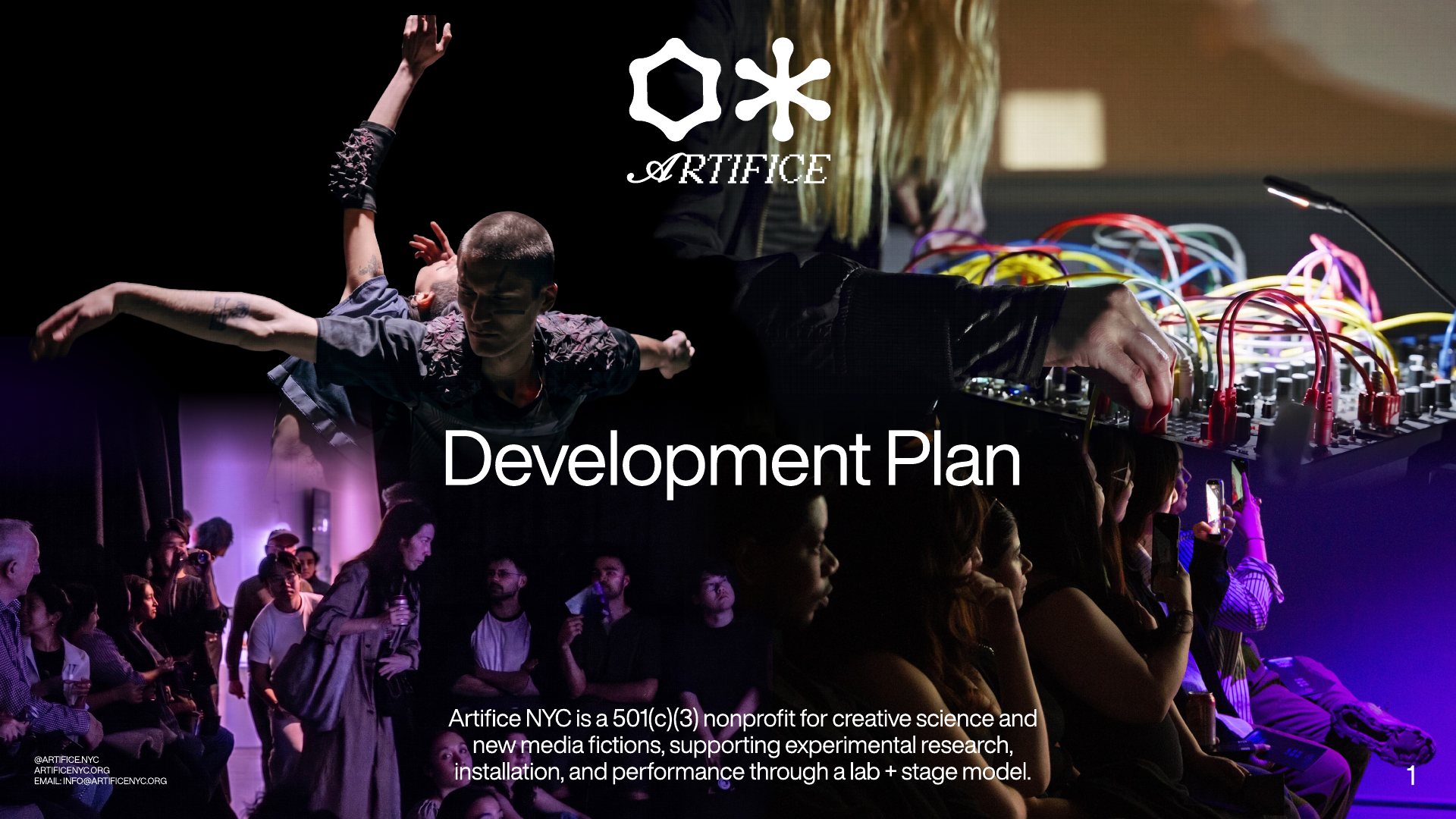
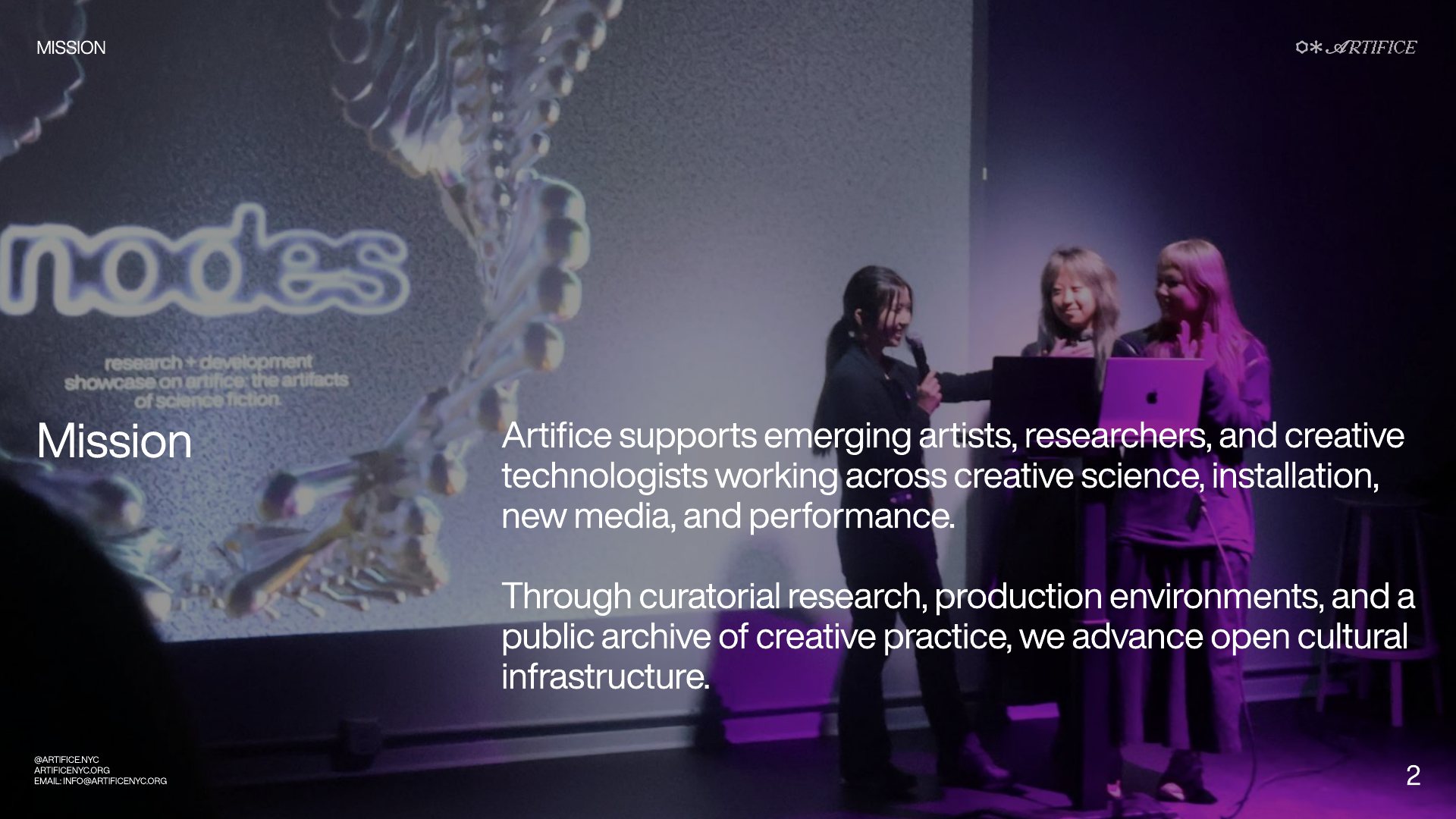
A small circle of artists, one season, each developing a single artifact, a working idea of a future that does not exist yet. Shown in the open, then at the Showcase.
Artifice commits its attention to a small circle of artists for a season. Each is developing a single artifact, a working idea of a future that does not exist yet, and Artifice gives it a public stage and a permanent record. Relationship-first — it begins with knowing the work.
Artifice does not provide studios, equipment, or a budget. What it provides is the platform, the audience, the permanent record, and being taken seriously.
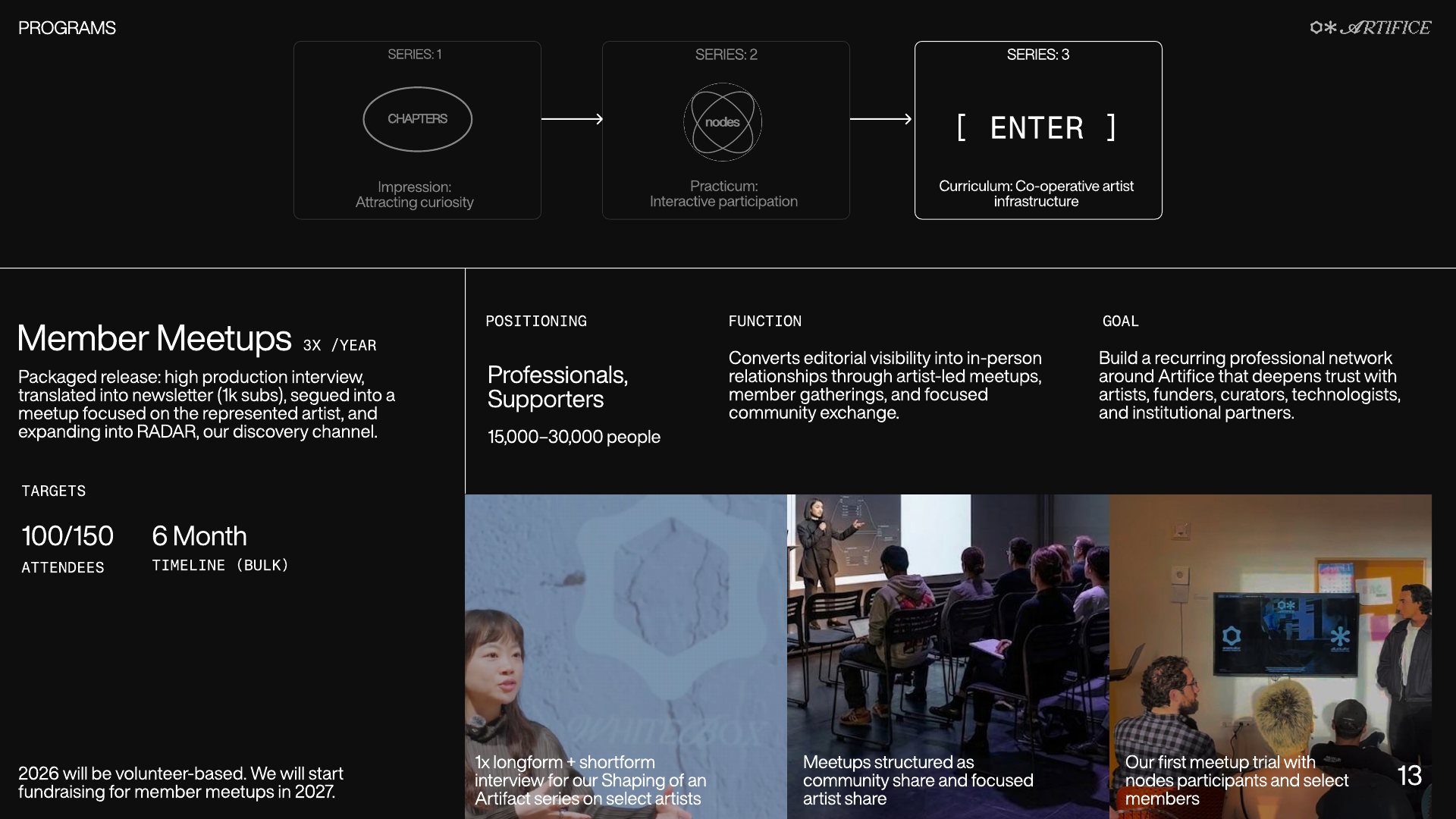
A handful of artists Artifice follows closely for a season, shaped by what they are actually making. The program gives them dedicated attention, room to develop in the open, and a place to show the work. Each makes one artifact, and the artifacts define the season.
The cohort is shown in the open, here, as it forms.
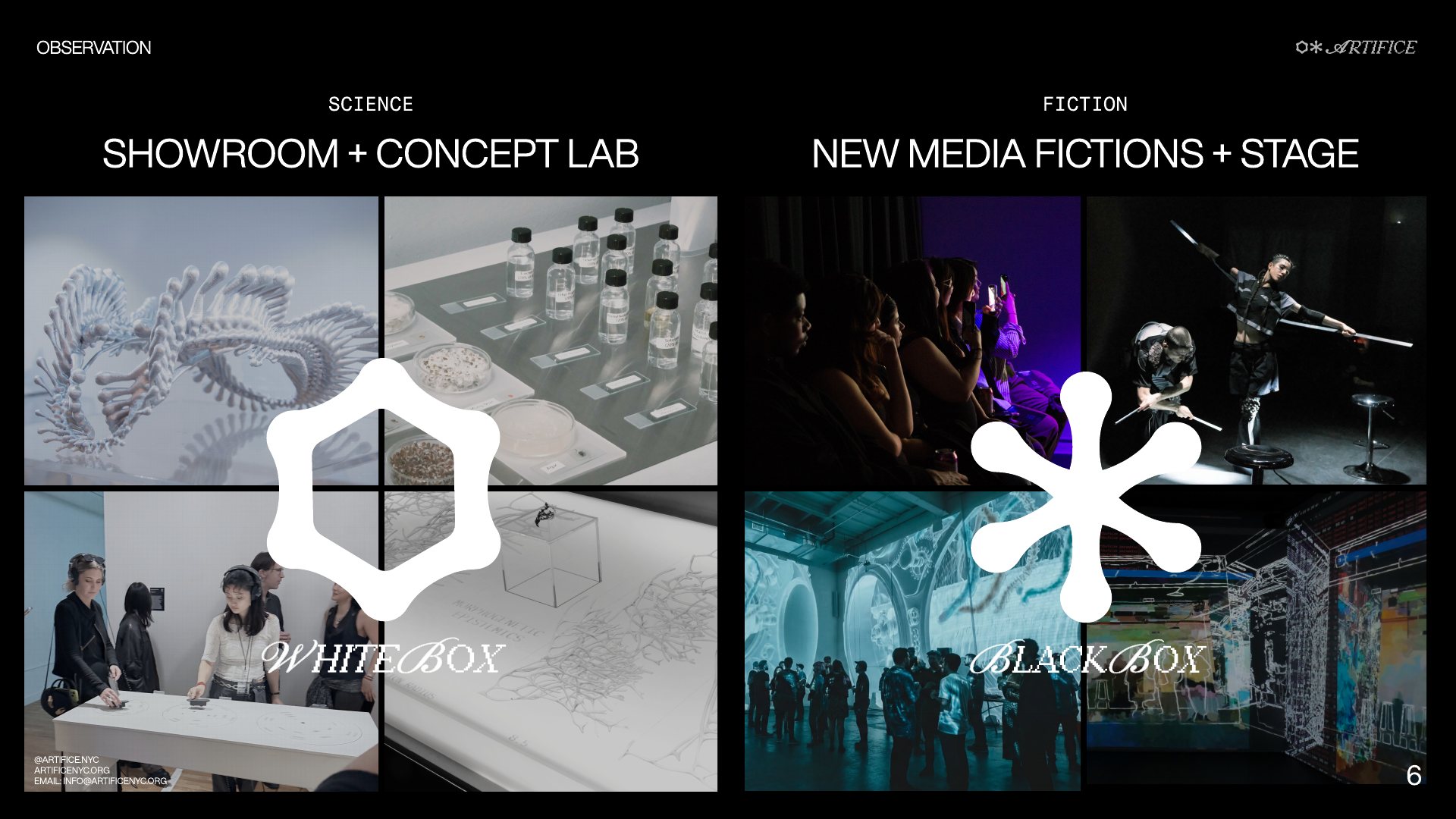
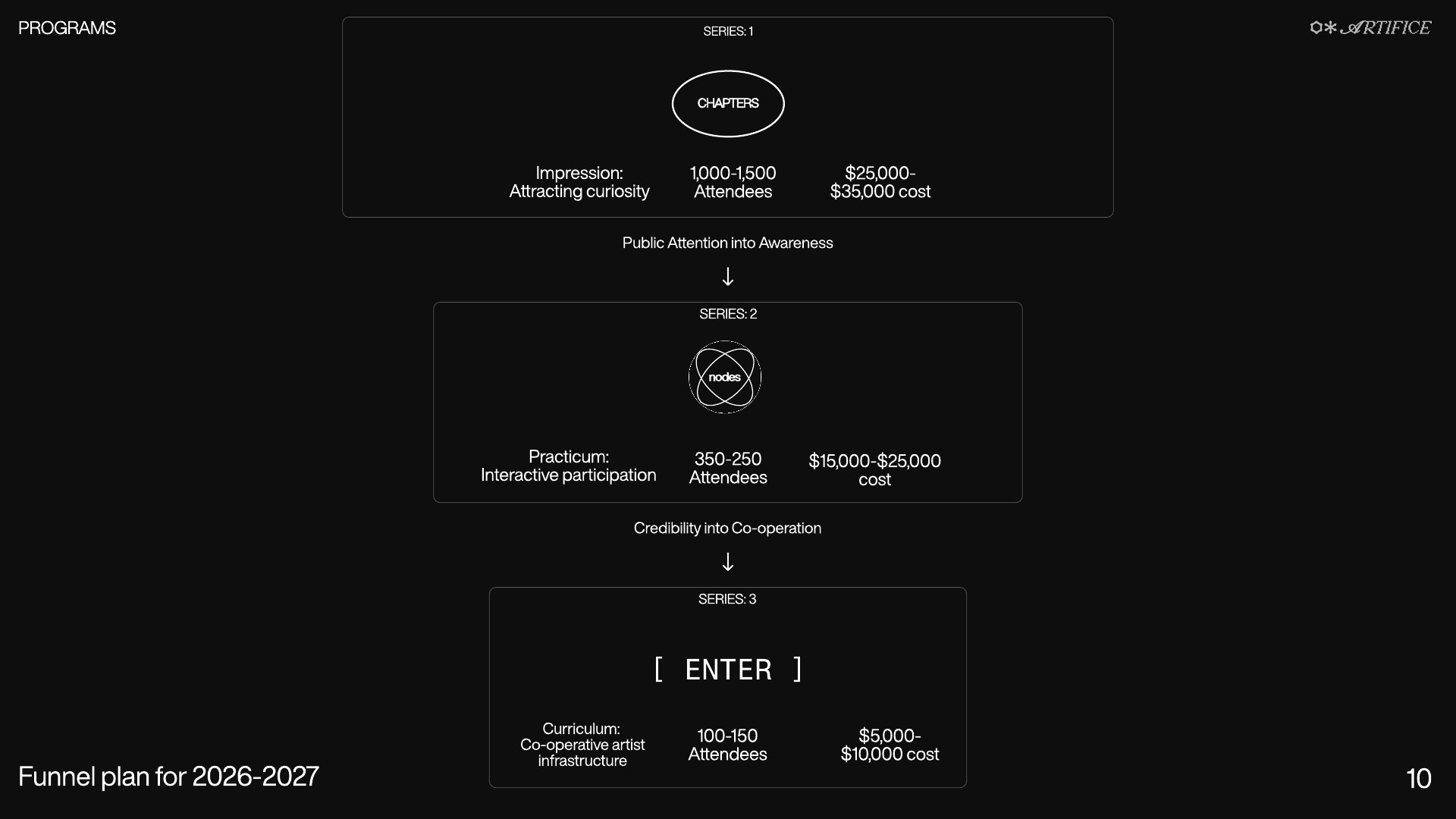
The cohort develops in the open at Open Houses — WHITEBOX, the process visible — and each artifact is recorded in full in the Artifact Index. The finished work becomes the Showcase — BLACKBOX, the experience — which the program used to call Chapters. The artists shape what it is.
In return: tell us what you are working on, develop in the open, and show up to the season. Low commitment, relationship-first.
Different worlds keep different things: art keeps meaning, finance keeps value, enterprise keeps repeatability, institutions keep continuity. The creative enterprise sits where they overlap.
Artifice is where those languages meet — a work of meaning given provenance, ownership, and a record, so it stays legible to the people who fund the future and the people who make it. The artifact is the unit that crosses between them; the Index is what stamps it.
The format Artifice curates by. Two ways a work can meet the world — one borrowed from how machines are read, one from how galleries are built.
Every work in the Index carries one mark: WHITEBOX or BLACKBOX. The mark records disclosure — how much of the making is shown, and how much is held back for the encounter. It says nothing about taste. It is the grammar that lets a model, a garment, and a performance sit in one archive and still be read in relation.
The words already have two lives. In machine learning, a white-box model is one you can read, its mechanism open to inspection; a black-box model gives you behavior without its reasoning. In the gallery, the white cube is the lit room where an object is contemplated; the black box is the dark room where work plays in time.
Artifice fuses them. WHITEBOX takes the white cube and drops its oldest habit of hiding the hand; it shows the wiring instead. BLACKBOX takes the dark room and adds a key — the Index opens it afterward.
Production is solved. Machines make without stopping and the feed never empties; what runs short is discernment — knowing what holds up and what to keep. That work belongs to the curator: to place a thing in context, which is the part a model cannot do for you, because it takes a point of view that can be held to account.
The feed already curates — by engagement, inside a black box, accountable to no one. Open curation is the reply: judgment you can see the reasons for, and argue with.
Curation has mostly been closed. The curator's taste is its own black box — you rarely see why this and not that — and the gate is held by a few rooms. The white cube hides the labor too, so the object can look as though it always existed.
Artifice opens it. The criteria are public, in the format; the provenance is public in the Index — who made it, how, with what; the making is visible at the Open House. This is open source applied to culture: the way open code let anyone read and extend the mechanism, open curation lets anyone read and extend the judgment.
The format carries the argument. WHITEBOX shows the process; the Index opens the BLACKBOX. Artifice refuses the permanent black box, in the work and in the act of choosing it. When machines make the culture and other machines decide what we see, an open record of who chose, and why, is the thing worth keeping.


